Are you looking for a simple but tasty treat that could go head-to-head with marshmallows as the number one campfire snack with kids? Well look no further…
We cook A LOT of marshmallows over the campfire with kids when we host our Forest School sessions and Woodland Birthday Parties. We know children love them, but they are not exactly a nutritionists best friend. They also contain gelatine made from pork or beef and we’re getting a lot more requests from parents who want vegetarian or vegan friendly campfire snacks for their kids when they come out to the woods with us. Last but not least, they’re sticky residue is a nightmare to get out of your clothes. Luckily, we have the solution.
Toffee Apple Slices are our alternative to marshmallows and kids love them! Granted they’re still coated in sugar but kids are getting some fruit down them and this recipe is vegan too. Our favourite sugar to use is coconut blossom sugar, as it less refined and less processed than regular sugar but any soft brown sugar will do the trick. They make a great hot campfire snack anytime of the year, especially in the autumn when you can walk out to an apple tree and pick the fruit straight from the branch.
Ingredients
Apples
Light or Dark Brown Soft Sugar
Cinnamon and Nutmeg – add to taste
Cooking Method
To get a fire that really makes the most mouth-watering toffee apple slices it’s best to let your flames die down and roast your apples over the hot coals – just like you would with a bbq. This will save them from burning.
First gently roast your apple slice over the fire until it begins to go soft and the pulp starts to bubble up.
Next, dip your hot apple slice in a tray of soft brown sugar until it is well coated. Be careful it doesn’t fall off the stick.
Roast your coated apple slice over the fire again until the sugar starts to melt.
Now for the final touch… let your apple slice cool for a minute and the sugar will harden up and give your apple a crispy toffee coating – simply delicious.
Eat and repeat!
For a slightly spiced variant on this snack then try sprinkling some cinnamon and/or nutmeg into the sugar. Ginger would work well too.
Which Wood Should You Use?
For your roasting stick we would recommend using either a hazel, willow or sycamore stick. At Forest School this can be a whole activity in itself, identifying the tree in the woods, cutting a suitable branch responsibly and reducing the damage to the tree, then practising some basic whittling skills by slicing away the bark near the tip and making a sharp point.
We would recommend using green (fresh) sticks from a tree as they are more resistant to the fire than dead twigs, so will last longer.
Sycamore – the winter twig and full leaf.
FUN FACT:Sycamore (Acerpseudoplatanus) actually contains it’s own natural antibacterial and antiviral properties, which is one reason why it is very sought after for use in kitchenware. This makes it a really safe wood to use for roasting sticks when out in the woods with kids.
Full disclosure, I personally can’t stand marshmallows, even though I cook so many, so I was very glad to discover this tasty alternative. Thanks to the Forest School Leader who shared this cooking idea with us at a skill share training day in Derbyshire last year, I can’t remember your name but we’re forever grateful 🙂
Happy cooking everyone.
James
James & Lea Kendall are the creators of Woodland Classroom. “Through our passion, enthusiasm and experience we help people connect with nature, feel healthier and have meaningful experiences through positive activity and creative play.”
“We are experienced outdoor educators with a background in bushcraft, forest school and nature therapy, who love what we do.”
We have some VERY exciting news! We are finally able to announce that we’ve gone into partnership with the National Trust at Erddig Hall & Gardens and Chirk Castle, both in the county of Wrexham. What this means is that James and Lea are moving Woodland Classroom up to Wrexham and from September we will be able to bring all our existing popular outdoor clubs, as well as some new ones, to children in the area and offer our outdoor education services to audiences in North Wales, Cheshire, Shropshire, Merseyside and beyond.
James explained his connection with the area; “I’m originally from this neck of the woods where I worked a lot with environmental organisations in Cheshire and North East Wales, so this feels like coming home and I’m really excited about this opportunity we have with the National Trust who have made us very welcome and have been totally onboard with all the ideas we have to offer our activities in the area.”
Our new base of operations will be Felin Puleston Outdoor Centre, which lies on the edge of the Erddig estate on the doorstep of Wrexham town. It’s a great location for locals to be able to access it easily and is currently also the home of the National Trust’s GAP (Green Academies Project) funded by the Lottery which has seen lots of new energy and restoration work go into Felin Puleston with a host of improvements to the venue which makes it perfect for visiting groups who want to learn more about nature.
Our new home at Felin Puleston, Wrexham. Kids building dens with us. The vegetable garden where kids can learn how to grow their own.
We feel incredibly lucky to have full access to this tailor-made venue. The Outdoor Centre includes an allotment for growing vegetables, a wildlife garden, orchard, den building area, indoor function room and kitchen for craft workshops and classroom sessions, and of course the beautiful 1,200 acre Erddig estate which lies on the other side of the gate for the children and groups to explore.
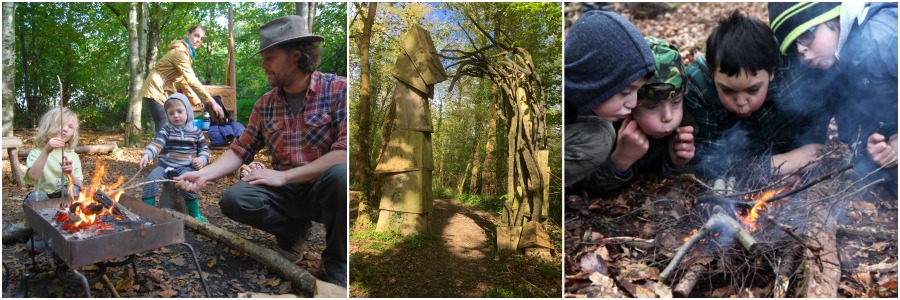
Our Little rangers parent & toddler group. The entrance to Forest Wood at Erddig. Boys learning fire-lighting skills at our sessions.
We also have the River Clywedog on our doorstep along with a wildlife pond both home to a wealth of water life which means that activities like pond and river dipping are going to be very much on the menu.
Susan Jones is the Volunteer & Community Involvement Manager at Erddig;
“We are delighted to be working in partnership with Woodland Classroom. Providing enjoyable and meaningful experiences in the outdoors helps us to connect with nature, improve our mental and physical wellbeing and value the world around us so we can continue to care for special places like Chirk Castle and Erddig, forever for everyone.”
Erddig Hall & Gardens. This stunning National Trust property sits at the doorstep of Wrexham town.
In addition to making the most of the Outdoor Centre, we’re going to be able to welcome groups of all ages to Forest Wood, a beautiful forest school site based in the heart of Erddig’s ancient woodland. Think tall trees, wild garlic and woodland wildflowers. It’s a fantastic spot for woodland learning.
About Woodland Classroom
So, who are we? Well… James and Lea have been running Woodland Classroom in Lampeter, Ceredigion since 2014 where they have hosted schools, organisations, adult learners, after-school clubs and kids birthday parties with a range of outdoor activities including; bushcraft, forest school, traditional woodland crafts, mindfulness and CPD training. All of this and more will now be offered at our new home.
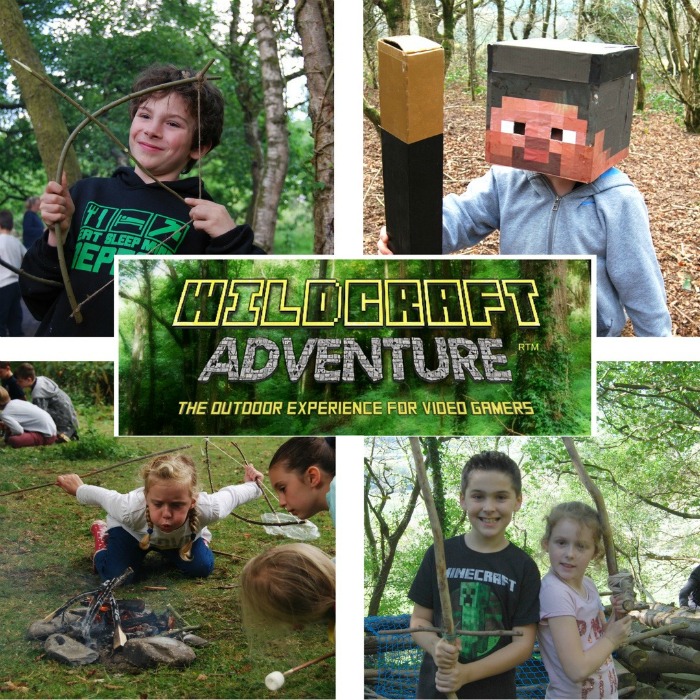
They are also the creative minds behind the hugely popular Wildcraft Adventure™ which takes kids’ favourite video games like Minecraft and transforms them into outdoor adventures that engage children in a host of physical challenges and bushcraft skills which score them point along the way, just like a real video game. There’s even a monster to run away from! It’s been so popular that outdoor activity leaders across the world are nor running the game; from California to Scotland, from New Zealand to Canada. James and lea are planning many more Wildcraft Adventures at their new Wrexham home for the near future.
James is a qualified Forest School Leader, Social Forester and experienced Woodland Skills Tutor. He has worked widely with children, young people and adults, leading on a variety of outdoor education and environmental projects. He has worked for several well-known environmental organisations and was also Project Manager for Long Wood Community Woodland, the largest community owned woodland in Wales, overseeing management of 300 acres of forest. He enjoys working with schools and communities to raise awareness of the environment, where his enthusiasm for spreading the message of learning through nature comes through. Lastly, but not least, he is currently undertaking a 2 year long course to become a bushcraft skills activity leader with the Bushcraft Competency Certificate scheme run through the Institute for Outdoor Learning.
“As a child, my Mum would bring me and my sister to Erddig and Chirk Castle where our imaginations could run wild with all sorts of play. I never thought I’d get the opportunity to actually work here and it seems fitting that I’ll now be able to offer outdoor adventures and learning for kids coming to these National Trust properties.”
Lea Kendall
Lea has years of experience working with children and young people, including 4 years working in a primary school as a Learning Mentor focusing on the social and emotional aspects of learning and working one to one with vulnerable children and challenging behaviour. She shares her time leading activities for Woodland Classroom with my work as a qualified integrative Counsellor. Lea is also a qualified practitioner of Mindfulness in woodland settings.
“I am a firm believer in the power of nature to be therapeutic for everyone. I believe that play for all ages should be a large part of our lives. My training as a Counsellor worked toward my long-term goal to incorporate nature and play therapy into our future services. I am passionate about finding ways to increase the self-esteem of people and encouraging motivation through positive experience, shared enthusiasm and a nurturing environment.”
Lea is now offering the first of her planned nature therapy courses with two Mindfulness events for adult learners scheduled for this autumn. See our events page to find out more.
We Can Also Travel To You
Not every group who wants our services has been able to travel to us though, and for some schools such travel can be a costly or complicated business, so we’ve always offered the option for us to come to your school or venue and we have hosted many Forest School and bushcraft sessiosn on school grounds, at events, or anywhere that wants us really. Want to know more? Just get in touch.
About our Outdoor Kids Clubs
Little Rangers is a weekly woodland parent and toddler group for children aged up to 5 years which follows the Forest School approach of child-led play and outdoor activities in a welcoming natural space. Activities are based around our central campfire and tots can get stuck into the mud kitchen, build a den, explore the wood or do some campfire cooking. Sessions are also a chance for like-minded parents to meet and share time together whilst their children are at play.
Young Rangers is our weekly after-school club for primary school aged children from 6 – 11 years. Parents drop their kids off with James and Lea where children will get the chance to play off steam after a day in school and take part in guided activities including bushcraft, outdoor games, crafts and campfire cooking.
Pathfinders is brand new to Woodland Classroom, a regular group for Home Educated children and their families. It’s something we’ve been wanting to offer for a long time, and we’ve been asked my Home Ed parents time and again if we could do this. Our move to Wrexham has offered the perfect opportunity for it to start. Sessions will be fortnightly and children from 0-16 will be able to join either our Forest School group where they can engage in child-led play and outdoor activities, or they can join our structured learning sessions where they will get quality tuition from James or Lea in environmental education, bushcraft and traditional woodland craft skills.
We’re hosting a taster session for Pathfinders on Tuesday 22nd August which is half-price for children and adults to come and see for themselves how this new club will work. If you’d like to find out more about the taster session, just CLICK HERE.
To find out more about our new kids clubs based at Erddig, and to take advantage of ‘early bird’ booking discounts just follow THIS LINK.
Even More Opportunities at Chirk Castle
The ‘woodland classroom’ amongst the ancient trees of the Chirk Castle estate.
Wrexham county is quite unique in that it hosts two major National Trust venues just within 15 minutes drive of each other. Not only will be offering our services to groups at Erddig but just down the road is the equally amazing Chirk Castle with it’s 480 acres of gardens and estate including deer parkland and ancient woodland. It’s a perfect venue for outdoor learning and we’re looking forward to getting stuck in and welcoming groups to our sessions.
Jon Hignett is the Visitor Experience Manager at Chirk Castle for the National Trust;
“We first started working with Woodland Classroom in April 2015 when our estate was used as the venue for their very popular Wildcraft Adventure sessions, using the clever template of explorer/builder type video games to engage with children in the outdoors. We could see from the first meeting that it would be a popular activity, and it has been a very effective partnership allowing experienced professionals to use Chirk Castle’s estate to help to move, teach and inspire young visitors and connect them with the outdoors at a young age. We’ve collaborated on a few projects since then, and throughout James and Lea have been wonderful to work with, positive, engaging, and committed. We’re eagerly looking forward to what future collaborations might bring!”
Chirk Castle & Gardens, hosts over 480 acres of parkland estate within which we will be running our outdoor events.
What the Future Holds
Not only will we be offering our tried and tested activities for children, our the plan is to expand our work with adult learners also, making Felin Puleston Outdoor Centre a real hub for environmental education for all ages. We plan to offer training to adult learners in the following subjects:
Bushcraft, Tree Identification, Greenwood Crafts, Woodland Management, Mindfulness, Eco Therapy, Nature Awareness, Foraging and Leathercraft.
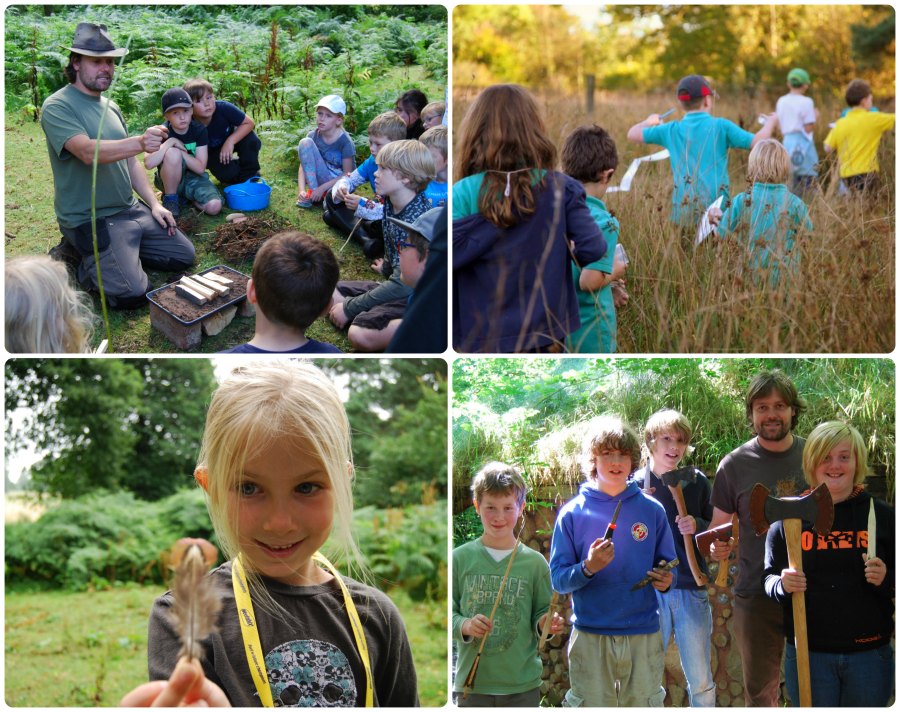
So, it’s exciting times for Woodland Classroom and we can’t wait to meet all the new people we will be working with.
Right, that’s enough typing for now… we’ve got a whole house full of stuff to move.
If you’d like to find out what we could offer you or your group at Woodland Classroom, then please get in touch. You can email us at hey@woodlandclassroom.com or phone James and Lea on 07876 794098.
We’re thrilled to have been featured in the latest issue of JUNO magazine, talking about the success of our Wildcraft Adventures and the benefits of outdoor learning for children. JUNO aims to promote a natural approach to family life. Our article “Into The Woods” explains how we persuaded children to turn off their screen and come outdoors.
You can also read about us elsewhere in the magazine as we tell our story of hosting Woodland Walks at Underneath the Stars Festival in Yorkshire. The magazine has a whole feature on upcoming festivals in the UK which are family friendly and eco-minded.
There’s also a great piece by Danny English from Communitree where he explains how a connection to nature is key to the health and wellbeing of children. In fact, the magazine if full of good stuff to be honest.
JUNO is a natural parenting magazine that inspires and supports families through its range of features, columns and artwork. Established in 2003, it is published six times a year, in February, April, June, August, October and December. The editorial is broad, covering all aspects of family life for all ages. JUNO is loved by many readers for its articles that share personal experiences and reflections, and for the beautiful and striking images and illustrations from a range of artists.
JUNO offers fresh perspectives in this fast-paced technological world, creating a non-judgemental community for those who are keen to follow “a natural approach to family life”. There are columns on home-education, empowered birth, teens and nutrition; interviews, craft and recipe ideas and a mix of features that can help readers make informed choices as they journey through the challenges of parenting.
JUNO is available through WH Smiths, independent retailers, online at www.junomagazine.com and as a digital edition.
The other day I saw a news report that in the UK there is a staggeringly large waiting list of 51,000 children who want to join Scouting groups across the country – you can read that article here. This one fact alone shows how much demand there is currently for regular outdoor activity sessions for children. Alongside this huge demand, I think there’s an equally growing groundswell movement of outdoor education, not only in the UK but in America too. It seems that everywhere there are initiatives, community schemes and small businesses springing up to offer children (and adults for that matter) quality wild time experiences.
Here at Woodland Classroom we’re one of many growing outdoor education service providers across the country and it’s great to be part of such a thriving community. Like so many others, our business is growing and new opportunities to get kids outdoors are coming to us all the time. We wanted to tell the story of another fellow outdoor educator, who only last year started out on his journey to create his own outdoor education company. It’s also the story of how we were able to help him set up his new forest school and outdoor education enterprise.
Meet James Dunlop. He is the recent founder of Wild Thyme Outdoors in Essex, England. Wild Thyme Outdoors aims to create exciting adventures for people of all ages; joining them in British woodland and the wider great outdoors! They are currently delivering; Forest School programs for school, youth and charity groups, also woodland adventure birthday parties for all ages. They have the privilege of unrestricted and sole access to several beautiful patches woodland which they use and care for to run their wildly exciting programs.
I think it’s the passion of the people running outdoor education today that is really key to it’s increasing popularity. Activity Leaders like James are all so passionate about their subject matters, about engaging people of all ages in nature whether it’s forest school, woodland kindergarten, Scouts & Guides, summer camp, or any of the many forms outdoor education can take. It’s the old tale of the teacher who inspired a child to ignite their own spark for learning about nature and enjoying quality time outdoors. I take my hat off to all outdoor activity leaders (especially all you volunteers) who are passing their enthusiasm on to the next generation.
We sat down with James to here the tale behind Wild Thyme Outdoors and what inspired him to go it alone and become a part of the growing outdoor education scene. We’re happy to say that we were able to play a part in his success story too.
LW (Lea Wakeman) Hi James. Thanks for talking with us. Can you tell me why you wanted to set up an outdoor education business?
JD (James Dunlop) “It’s just part of who I am. Outdoor education is an expression of me as a person, an unapologetic nature geek with a fiery passion for working with children. They are so much smarter than we are, so much more aware! I learn so much just teaching young ones. There is however, an upsetting lack (in my honest opinion) of outdoor provision for young and old alike. We treat nature as if it is something totally separate to ourselves, even the word nature, a label, is a separation of ourselves from all that it encompasses, what many don’t realise is we are nature too! I want to set up a outdoor education business to give people the opportunity to realise, we are not separate from the natural world, nor should we be afraid of it.”
LW I couldn’t agree more. Tell me about your background and how did you get to this point in your career?
JD “As a little one I grew up in a suburban part of Wales not too far from Newport. It was a time before PlayStation and iPads, my favourite ‘toy’ was a pair of buckskin trousers and a waist coat that my parents had bought back from a business trip to America. I would wear these continuously always wanting to be the Indian in a game of Cowboys & Indians. I have no idea where this fascination with the indigenous people of America came from, but it still hasn’t left me to this day!”
“Long story short, I joined John Ryder of the Woodcraft School for a week as a 16th birthday present, joined the cadets, attended the Army foundation college and post military found myself at Shuttleworth College studying Outdoor Education.”
“My first outdoor education job was with Stubbers Adventure Centre in Essex where I live. Stubbers gave me the opportunity to grow as a teacher/instructor but also a canvas to develop my understanding and knowledge of the the natural world and primitive skills. I was given charge and free reign of their Bushcraft Activity Week.”
“After 6 years I entered the fitness industry. But even here my passion for all things outdoors and nature based followed me. I discovered the world of ‘natural movement’ and soon became adept and qualified to teach what is now coined ‘primitive movement patterns.’ The itch to get back to working outdoors grew and grew and before long I was in a position where I either did something about it or moved away from it altogether.”
“Enter an amazing influence! Woodland Classroom pops up on my facebook newsfeed, before I’d finished my coffee I had read, watched and consumed everything James & Lea had on social media and their website, now a YouTube search on Forest School lead me to even more! I was hooked! This was it! The answer to everything I had learnt over the last 10 years, the cure for the itch!”
“So here I am now! Standing on the edge of a woodland with my big idea; Wild Thyme Outdoors – forest school, nature nursery and woodland skills.”
LW Setting up your own woodland activity school is a big leap. What’s your vision for your business in 3 years time?
JD “In 3 years time, I would like to have multiple locations running forest schools and nature nurseries for various age groups and a committed and visionary team of individuals helping me deliver some of the best nature immersion and outdoor education training in the South-East.”
LW We first met after you contacted us about our online Mentoring scheme for forest school leaders and outdoor educators. How was your experience with the mentoring session? What did you get out of it?
JD “I’ve never had a mentoring session before, though I do recognise the power of mentorship. For months I was saying to my peers that I needed some kind of business mentor or just a personal mentor of some description. Needless to say when I saw that you offered forest school specific mentoring It ticked many boxes for me. I could have a conversation with someone who was already further down the path so I could get answers to many of my questions and also finally have that mentor, that person that I could be held accountable to.”
“You were both super open and honest about how you structure your business and what pitfalls and hurdles you came across that I should keep an eye out for. This greatly reduces my learning curve and speeds up all the boring admin bits that I hate doing. More importantly you enquired about what I had done and intended to do before I started offering forest school programmes, highlighting things that I was wasting time on and where my focus really should be.”
James has been having a lot of success with bookings for woodland birthday parties.
LW What was the one most useful piece of advice that came out of the Mentoring session?
JD “To just get on with it! I spend so much time making sure that every possible angle has been covered that it would be 2018 before I was even in the position to start. I’d say to anyone reading this, that if this is what you want, stop fretting and get a move on. Start small, run a few pilot days for friends and family (which is exactly what I did) and tell as many people as you can about what you’re doing. Before the month was out I had countless people asking me for more details and two schools interested in developing a relationship with Wild Thyme!”
LW What was the main benefit of having the Mentoring session to you? What did it enable you to do?
JD “I think the main benefit was to create clarity for me to begin, both you and James were able to put my mind at ease about so many things, and point me on the path that I needed to be on. Whilst I’m all about creating your own journey it can be a massive help to be shown parts of the journey by those who have done it.”
LW What successes have you had with the business since the Mentoring session?
JD “Since we last spoke; we have registered the business so it’s official, we have booked our level 3 Forest School Leaders training and we have a queue for birthday parties! We have also explored the realm of opening the Forest School up as a day care/nursery 3 days a week which has been met with great interest. Our website is being constructed and we have graphic designer working on the brand designs and associated media. Through several connections we have 3 schools interested in our Forest Schools program. It’s all Go! Go! Go!”
LWThanks for speaking with us James, and best of luck for the future. I know we will keep in touch.
You can find out more about our online Mentoring scheme by following the link below.
It’s an exciting time to be involved in outdoor education and if you think we could help you like we’ve helped James and so many others, then don’t hesitate to get in touch.
You can find out more about Wild Thyme Outdoors and follow James’ continuing adventures by visiting his website RIGHT HERE.
“While we see the forest, a person with ASD will see every single leaf on every single branch on every single tree in the forest” Paul Fijal
Something that I’ve noticed happening naturally over the last couple of years is an increase in kids on the Autistic Spectrum Disorder coming to our Forest School sessions. With this trend I decided to explore deeper into how we could adapt, change or enhance the way we do things to help integrate young people on the autistic spectrum within our activities. Not only did I learn more than a few things but I also came up with my list of Top 9 Tips for outdoor activity leaders when hosting children with ASD, which I’d like to share with you.
Before starting up Woodland Classroom I had supported young people with learning differences in my role as a Learning Mentor so I have some experience of Aspergers syndrome and diagnosis’s of ASD. I have also volunteered for a day in a school specifically for children who have Autism but I still didn’t feel like I knew how to be more integrative and able to adapt within our Forest School sessions.
My experience of autism in others is also hugely variable, from kids who hit their head repeatedly on the wall and need to spend lots of time in a padded sensory room with no speech and no ablity to engage on a social level, to the other end of the spectrum such as University students deemed as being “a bit shy” who have ended up with a diagnosis of Aspergers syndrome which came as a shock to everyone who knew them. So, with all this in mind I was left feeling confused about what being autistic really means.
Among other research, I watched some TED Talks on YouTube to help me better understand the world of autism and what it might mean to us and our outdoor education business. The biggest message I gained was one I already knew deep down, that every child is different and this equally applies to kids with ASD as much as it does with any other child. Just because a child has been diagnosed with ASD it does not mean there are a set of rules which apply to the way they behave or see the world.
All the kids we have had on our Forest School sessions with ASD have been vastly different, their needs are different, their preferences are different, their likes and dislikes are not the same and their social interactions varied.
On most occasions we have kids who are high functioning attending our events and they are left by their parents for a full day of activities and 95% of the time the day goes by without incident.
On other days when we have had kids with lower functioning ASD they have attended with parents and there has been no or little impact on ourselves as activity leaders and how we need to run our sessions.
While watching different TED Talks on Autism I was particularly struck by this metaphor from Paul Fijal…
“While we see the forest, a person with ASD will see every single leaf on every single branch on every single tree in the forest”
This made me wonder why is it that a woodland, an ever changing environment with so much rich and wonderful stimulus, isn’t overwhelming for kids that can be prone to sensory overload? Come to think of it, this question applies to all natural environments and wild spaces.
One thing is apparent, nearly all children enjoy their time in the woods being themselves and partaking in the activities Forest School offers them.
I also believe that kids with ASD gain something important from their time with us, there is a therapeutic quality about the activities and natural setting that no traditional classroom can give you. There is peace and tranquillity to be found in the forest. There is space to take time-out whenever needed and even though there are lots of stimulus entering the senses, it is all natural, moving at a seasonal rhythm and it speaks to a deeper part of what makes us human.
If kids with ASD are sensitive to routines being changed then surely the slowly-changing environment out in a woodland provides a subtle learning opportunity. Children see the modern world as ever changing, it never stays the same yet in a woodland the change is gentle and brings with it new beauty and new experiences and it all happens one day at a time, one moment at a time.
What I realised is everything we were already doing in our Forest School was absolutely correct and I am always ready to remind myself that not having preconceived ideas about autistic kids and their behaviour was the best way to be.
I promised to give you some tips from my experience. Here’s my advice for anyone who runs Forest School or outdoor activities and lacks experience of working with kids on the autistic spectrum.
MY TOP 9 TIPS
FOR OUTDOOR ACTIVITY LEADERS, CONSIDERING HOSTING CHILDREN WITH ASD
TIP 1 – Ask the Right Questions Early On
We often run events where the parents drop their kids off for the day. In this situation, if a parent wants to book their child to your event and is unsure whether or not they should stay with them for the day then you can ask the parent whether their child has any one-to-one support in school. This should start the right sort of conversation. If the answer is yes, then I encourage the parent to stay for at least the first session, over time you may get to know the child enough and feel the parent staying is no longer necessary. Remember, every child is different.
TIP 2 – Invite Their Brother or Sister
Having a around can be a great help as they usually have the best understanding of their brother’s or sister’s needs and if the parent has discussed this with them in advance they could be able to let you know if something could be changed or needs dealing with to make things smoother and avoid an incident. A sibling is also a familiar face for the child, especially when coming to a strange new environment.
TIP 3 – Get an Appropriate Registration Form
I would make sure there is a good sized section on your child registration form that allows for a parent to explain any needs, learning differences or medical conditions their child has. When you get the form always read through it whilst you are with the parent and ask your questions. If the child is down as ASD or Aspergers for instance, you can then ask the parent if there is anything you need to know that could help their child enjoy their experience and if there are any needs that they haven’t written down that may help.
TIP 4 – Get the Right Team Together
If a parent has explained that their child struggles with team work or competition etc, I will always try and team these kids up with quieter children rather than louder more excitable children. If you’ve got regular kids on your event that you know would have the right temperament then that can be a help.
TIP 5 – Get a Hammock
At our Forest School we have a hammock hanging in the woods away from the main circle and hub of activity but in clear view. At the start of the session make it know to the children that the hammock is for ‘time out’ only, and when a child needs time out, they should ask and are given permission to use it. If a child is using the hammock then all other children must leave them alone, it is not a place of play but a place to chill out.
TIP 6 – Give Space When It’s Needed
Unfortunately it can often be other children that ‘wind up’ a situation and almost seem to enjoy watching a child have a melt-down. Some kids will wrongly see such behaviour as entertainment and that can’t be tolerated. Very often i’ve found it’s the the other kids watching the melt-down that need to be dealt with rather than the child who is having difficulties. Kids tend to know how to self sooth so give them space by distracting any other kids and getting them away from the situation, you or a colleague can keep half an eye on the child to make sure they are not at risk from harm but it is often best to leave them alone and maybe check in with them after a little while and let them know you are there if they need you, if they want to be left alone then respect their wishes and do so.
TIP 7 – Keep Language Simple
If you find that the child with ASD has upset another child or their behaviour is not acceptable then tell them not to do this in as few words as possible, keep it simple and to the point, do not give long explanations as to why. Just say no. For instance; “do not kick”, “do not take her stick” etc. Make sure they have understood, repeat if needed and then let the incident go.
TIP 8 – Be Yourself
Get rid of your preconceived ideas of ASD and start from scratch with each individual, get to know them for who they are, ask questions and watch their body language, know when to back off and leave a child in peace and keep doing what makes them happy. This sort of approach can be applied to any kids in your group, you don’t need to be different with the kids with ASD than you do with kids without autism.
TIP 9 – Do Your Research, starting with….
Lastly, watch this video from Ted X Talks by Paul Fijal. I found it explained for me how a child with ASD could hit the point of melt-down. So as an adult responsible for such kids on our events it really helped my awareness.
So in conclusion, you might be asking, “why are there only 9 Top Tips instead of the well established Top 10?” Well, like I’ve learned in my research into children with autism, it’s good not to expect a set pattern for everything. Norms are there to be challenged.
Good luck with your own outdoor adventures and thanks for reading,
Lea.
Lea Wakeman is an outdoor activity leader and founder of Woodland Classroom, based in the UK. She is also a trainee counsellor and has worked as a Mental Health Mentor.
Baking bread out in the woods has always been one of those mystic arts to me. Something that, like tool sharpening, seems shrouded in mystery. With my ongoing Bushcraft Instructor training I thought it was high time that I made an effort to try it for myself. What’s the worst that could happen?
I also had a 4 litre dutch oven sitting in my shed, which was a Christmas present 2 years ago. I always felt a bit guilty when I came across it. So it was time to do it justice.
I’ve seen it done before but couldn’t for the life of me remember the exact method the teacher used at the time. So when it came to our next bushcraft training sessions I told everyone that I would bake them a loaf for the evening. The challenge was on.
The trick to using a dutch oven, as far as I understood it, was to get an even heat around the whole pot so that your bread would bake all round. So what was needed was a campfire that had been burning for a while to produce a good amount of hot coals, more like what you’d get in a barbecue. It’s this bed of coals and ember that makes an effective cooking fire, rather than roaring flames. I actually brought along some Welsh charcoal for the bake as I wasn’t sure what state the communal fire would be in by the time I came to experiment. This worked really well but I imagine if you use hardwood firewood and burn it down to coals it would be just as good.
Above: This is not the same loaf as I cooked as it was dark by the time I was baking. You can see though how the coals have been placed on top of the oven lid it help it bake with an even heat.
The good news is that the loaf was a success! In fact it was one of the best loaves I’ve ever tasted, and even better that it was fresh out of the oven. Everyone complimented my on it and the mystery of using a dutch oven is firmly behind me, though I imagine there’s a lot to learn yet. For anyone who wants to give it a go for themselves I’m going to share that tasty recipe with you now….
STOUT & FRUIT SODA BREAD
This recipe fed 6 adults with a very generous slice of bread. They all loved it. Any left over stout can be generously gifted to a camping buddy that likes that sort of thing. I prefer cider myself. Having enjoyed this loaf myself I can say that it was delicious straight out the oven and didn’t even need any butter to improve it though you can try that if you like. It tasted more like a cake than bread 🙂
WHAT YOU NEED
4 litre dutch oven • large mixing bowl • mixing spoon (whittled by yourself preferably) • a metal dish that will sit in the bottom of your oven • 4 small stones (trust me)
INGREDIENTS
2 big overflowing handfuls of strong wholemeal flour
2 big overflowing handfuls of strong plain flour
A half handful of sugar (caster sugar is best as it’s finer)
1 heaped tablespoon of baking powder
1 good pinch of salt
1 big overflowing handful of mixed dry fruit
1 egg
1 can of stout
Keep some extra spare flour left aside for dusting the metal dish
METHOD
Mix up all the dry ingredients together. I did this in advance before the trip and put them in a plastic tub so it would save doing it around the campfire at night.
In your mixing bowl make a well in the middle of the dry mix and add crack the egg in. Then mix with your wooden spoon.
Slowly add the stout until all the dry ingredients are mixed in and you have a ball of dough that holds it shape.
Coat your metal dish in a light layer of your spare flour. This will stop the bread from sticking to the dish.
Place your dough onto the floured dish and sprinkle a little sugar on top.
Now it’s time to use those 4 mysterious small stones. These are placed evenly spaced at the bottom of the dutch oven. The metal dish is then placed on top of these so it sits comfortably. What this does is elevate the dish from the bottom of the dutch oven to allow the air to circulate. This all helps prevent the lower crust from burning.
Place the lid onto the oven and pop it into your campfire.
We surrounded the oven with a ring of charcoal and placed some hot coals evenly on top. This is the part of the process that inly experience can teach you and I’m looking forward to trying this recipe again and seeing if the cooking time changes. I imagine it depends on how hot your fire is and how even the coals are around your oven.
I checked the loaf after 15 minutes and we all agreed it needed longer.
I cooked my loaf for 25-30 minutes but I think i could have got away with taking it out a bit sooner. You will see some burn on the left hand side of the close up picture. This is where there was a flaming log placed right up against the dutch oven so I think it caused that side of the oven to be hotter.
The last tip I was given was to use a clean knife to push into the middle of the loaf. If it comes out clean then the bread is ready.
Above: The complete loaf. Not bad at all for a first effort. In fact it was one of the best breads I’ve ever tasted.
By the way, did you know that the phrase “the upper crust” comes from a time when those who could afford it would get the more valuable upper section of the loaf rather than the often burnt bottom. So the rich were referred to at the “upper crust.”
I hope this has inspired you to try dutch oven baking for yourself. I’ve definitely got the hook and have made a promise to myself to try a different recipe each time I go camping now. Suddenly the world of outdoor baking has completely open up to me. It’s a real sense of achievement.
We’ve taken the classic Christmas song and given it our very own twist. So join us for a good old fashioned sing-along. We love singing this around our campfire with our kids groups throughout the festive season.
Forest School sessions are all about letting children be in charge of their own learning and giving them the chance to explore wild spaces on their own terms so they can grow emotionally and intellectually. We run plenty of outdoor sessions throughout the winter because we believe that children should have access to great outdoor activities all year round.
Enough of all that though, on with the song…..
We’ve made a series of pictures to celebrate each of our 12 Days, which also showcase many of the awesome activities that children get up to at forest school sessions. You can see these images by scrolling through…
We love singing this round the campfire with the kids through December and you’re very welcome to use this song too. Here’s a run down of the lyrics:
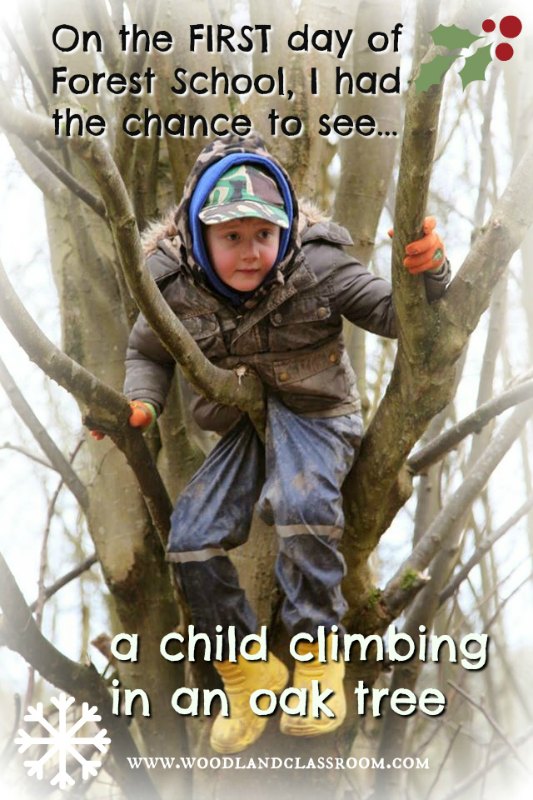
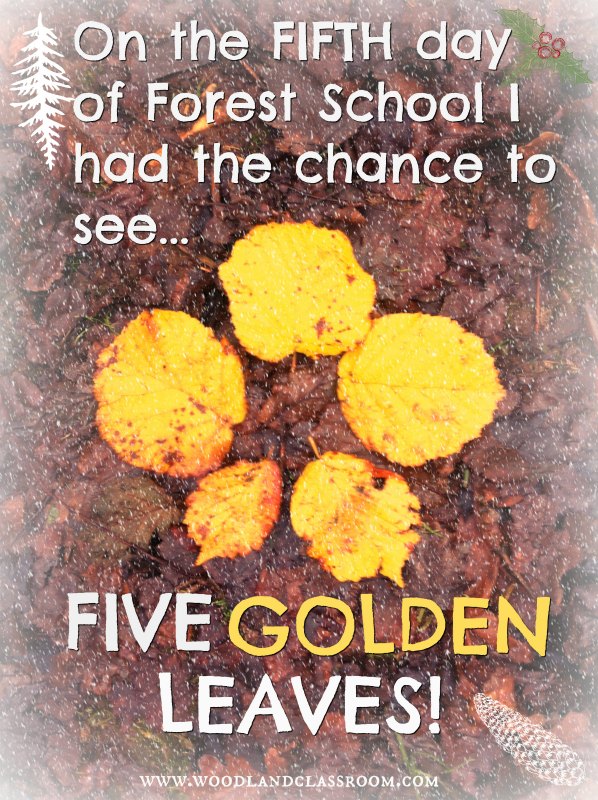
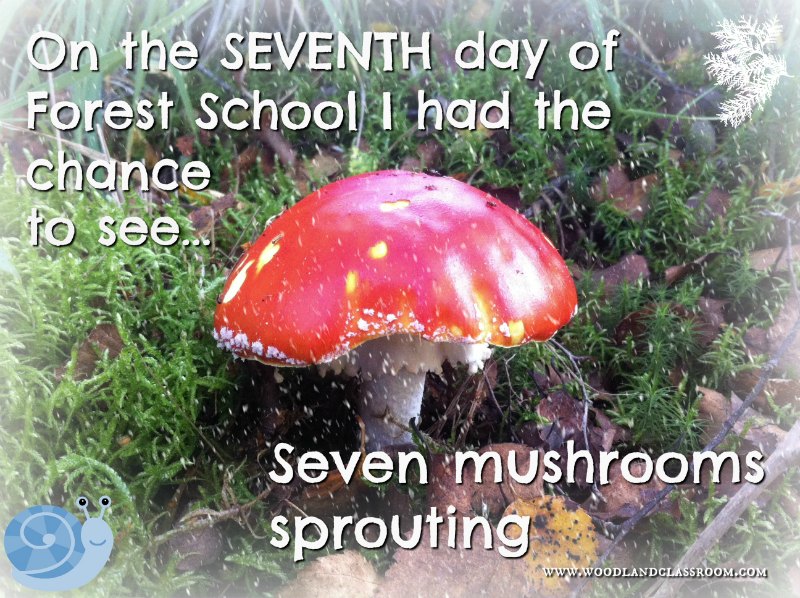
“On the first day of forest school I had the chance to see…
A child climbing in an oak tree.
Two muddy boots
Three storytimes
Four crawling bugs
Five golden leaves!
Six kids a whittling
Seven mushrooms sprouting
Eight campfires blazing
Nine shelter builders
Ten monkeys swinging
Eleven axes chopping
Twelve hunters tracking”
Happy Holidays, Merry Christmas and a Happy New Year to all.
TV presenter, author and bushcraft expert Ray Mears has given forest schools his seal of approval. Having observed a forest school group during a recent canoe trip he described how one boy “… was building his own legend, the person he was going to become. He’d become something more and that’s what it’s about. There’s a chance (in forest schools) for self-discovery and self-empowerment.”
Forest School is a thriving, growing movement worldwide which is getting children of all ages outdoors to learn at their own pace and embrace the natural world around them. As a forest school leader myself and long term follower of Ray’s work I felt really lucky to be able to join in a televised discussion on the merits of learning in the great outdoors.
Above:Ray Mears in his element. Photograph by Goh Iromoto
Ray Mears is a world-renowned champion of bushcraft and wilderness skills, having starred in numerous television series and written books on the subject, which have inspired millions.
During a recent television debate in the UK, the panel, including Ray, was posed the question; would they send their kids to a summer crammer where they could brush up on their academic skills and get ahead of the class, or would they pack their kids off to a forest school where they could learn skills like fire-lighting, den building and woodcraft.
Ray replied, “the child has got to want to be there, they might want to go to a crammer, I think there’s a place for both.” This, to me, underlies a key point that parents and teachers each have a responsibility to fire children’s passions and interests in whatever subject or activity it is that gets them excited about learning.
Ray explained how the forest school camp system works in Canada where this approach to learning is well-established, “…a child goes very young and gets to do activities and then they go back the next year, they’re a little older and get given more responsibility and eventually they’re doing 21 day trips on their own by canoe, boys or girls, through the wilderness and they’re capable.” What an amazing adventure for any young person that would be.
During the debate a recent study was quoted which states, “three quarters of kids who go to a summer crammer will end up at a top university, compared to half of those from similar backgrounds who don’t.” But on the flip side of that argument, “child psychologists say that outdoor exploits aren’t only great for physical health but for mental health as well. The same psychologists also have concerns about ‘tiger parents’ who want to hothouse their kids in some sort of obsessive bid to produce pint-sized prodigies, who could end up stressed, frazzled and burned out by their late-teens and who could actually end up with mental health problems.”
I hadn’t heard of tiger parents, so I looked it up. Tiger parenting is a term which refers to strict or demanding parents who push their children to be successful in education by attaining high levels of scholastic and academic achievement, to the detriment of the child’s social, physical, psychological and emotional well-being. It sounds a world away from the child-led approach of a typical forest school where kids learn resourcefulness, team-work and determination. I feel that forced study risks leading kids toward depression, anxiety and stress.
Above:Ray Mears has seen first hand the positive benefits of forest school teachings. Photograph by Goh Iromoto
Ray spoke about his recent trip to Canada where he got the chance to observe children who attended a forest school camp. “I gave a presentation at a festival and in the audience there were some kids from one of these summer camps. I was watching one of these youngsters because he was carrying a book around with him. The book was written by a naturalist I’m really fond of, Grey Owl, who lived in that area. This was a heavy tome for a youngster to read by today’s standards but I saw that he treasured that book.”
“The next day I’m out on a canoe trip and I could see that same party of youngsters (canoeing) on the other side of the lake. These were boys of about fifteen and they had passed the hardship point, because it’s a hard way to travel.” Seeing that same boy who the day before had been clutching his precious book Ray described the look on the child’s face, “you could actually see that with every paddle stroke he took he was building his own legend, the person he was going to become. He’d become something more and that’s what it’s about. There’s a chance for self-discovery, self-empowerment and it’s no surprise that the youngsters who go to these summer schools very often end up as leaders in that part of the world and it’s a great thing to see.”
The main thrust of the debate was a parent’s choice between a summer crammer or forest school for their kids and during the phone-in I got the chance to add my own observations to bolster Ray’s championing of forest school. “There’s no doubt that academia is important but what forest school does is give an opportunity for child-led learning away from the formal classroom setting. The kids who attend forest school are gaining a nature intelligence and an emotional intelligence, which in the long run, I believe, makes better rounded, more confident people. You give a child a sharp tool and it’s empowering, they get a fantastic experience from that.” Many children today have a disconnection between the natural world and the modern world we live in and forest school projects are providing an antidote for that.
Some cynics might say that today’s kids would rather be in front of their iPad than building dens outdoors, but I don’t think forest school is a hard sell to children. I believe it appeals to their sense of adventure and children should be allowed to have that experience and so much of that is getting lost now with the increasing time that kids spend on screens.
Ray added that, “There are a lot of British parents now sending their children to these camps in Canada and North America.” But for those wanting to keep their kids a bit closer to home you’ll be glad to know that forest school camps are growing in the UK too with providers offering everything from one day activity sessions to week-long wilderness experiences. I believe we will see more of these holiday clubs and camps in the future as more parents take action to combat the dangers of too much indoor screen time for their kids.
Above:Children immersed in nature and learning empowering new skills at one of our own forest school sessions.
Regarding the ongoing fight in many family households to get kids away from their screen and back to the outdoors, Ray saved his best advice to parents for last, “The secret is that the parents need to do these things (outdoor activities) for themselves, that’s the best way, it’s just the normal way of growing up. If you want children to take an interest in nature, don’t just send them somewhere, have an interest yourself and it will be the most natural thing in the world for them to follow on.”
If you want to know more about what exactly a forest school is, check out our short video, appropriately titled “What Is Forest School?” RIGHT HERE
If you’re a parent who wants to find out more about local forest school providers in your area, I’d advise googling it, you’ll soon be heading down a rabbit hole of amazing projects to inspire your kids.
You can watch the full television debate with Ray Mears HERE. Skip ahead to 01:24:44 to see ‘Forest School vs Summer Crammer” You’ll be able to hear me trying not to sound nervous whilst talking to Ray, one of my childhood heroes.
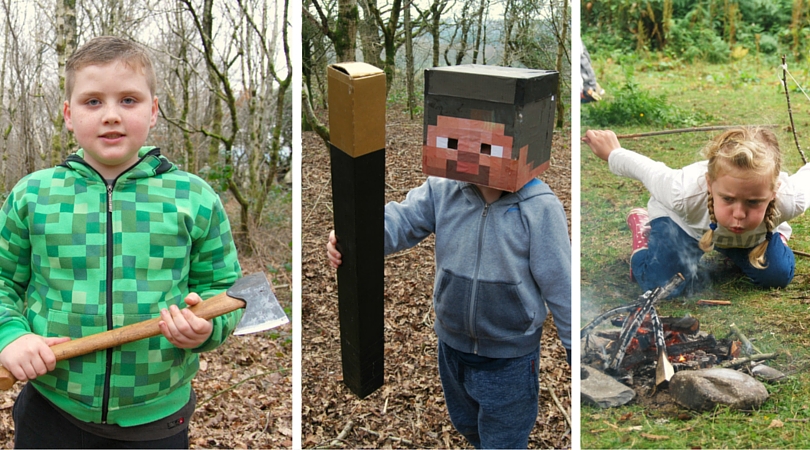
Children are choosing to leave their screens behind and are opting for a new outdoor game which combines bushcraft & survival skills inspired by their favourite video games which aims to get them reconnected with nature and excited about the great outdoors once more. It’s been so successful that activity leaders across the globe are now signing up to run this game, Wildcraft Adventure, for themselves at their venues and joining the mission to get kids off-screen and outdoors.
Kids make their favourite video games come alive in the outdoors.
Wildcraft, borrows themes from popular video games like Minecraft and is giving kids an outdoor experience they won’t forget. Though barely a year old, it’s been a huge hit with parents and children.
It was over a year ago, we were sat in our garden and asked the question; “For those kids who are spending too much time glued to their screens and have little interest in getting out into nature, how do we engage them in a way so that they choose to go outside? Simple, we take their video games outdoors!”
But this is not Pokemon GO, we’re not getting kids to take their mobile devices out into the woods and calling it ‘quality time outdoors’, they’re leaving those at home to play a video game style adventure for real in the woods which includes all the challenges they’ll be familiar with whilst at the same time engaging them in the natural world. Yes, there’s lots of hidden nature-learning woven into the game and they have to use their new knowledge and skills to gain points and experience throughout the day.
When creating Wildcraft Adventure, we did some serious research. We watched and spoke with children playing games like Minecraft and Terraria, and talked to parents about their experience of their children’s love of video games. It soon became very clear that although the children do get a lot of pleasure from the games, it’s become a real problem for parents, as they want to put a reasonable restriction on their child’s screen time. Parents told us that they faced an uphill struggle as there’s such an addictive quality to these games that restricting screen time can cause arguments in the family home. Many children do not seem to be able to easily drag themselves away from their screens. The more parents we spoke with, the more we heard about this recurring problem in the home.
We remembered back when Super Mario & Sonic the Hedgehog first came out. There are many common themes in video games such as collecting resources, protecting yourself from monsters, beating the boss, making potions and building your world, which all fit really well with the outdoor adventure we were creating. Our game requires players to use team building, problem-solving and lots of imagination.
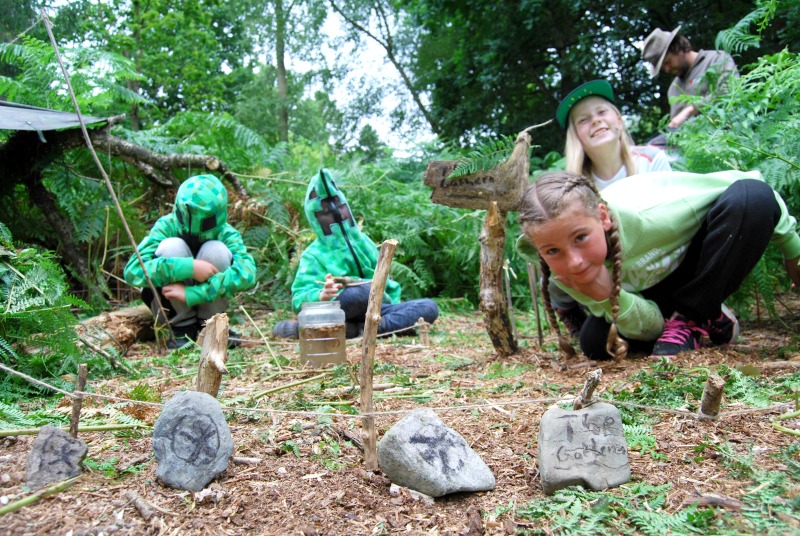
Kids sometimes come dressed as their favourite video game characters. They use new skills and their imaginations to build their camp.
Opening Up A Natural World of Adventures
Wildcraft is also proving to be a great gateway activity for kids who are coming along to our days and then wanting to know more about bushcraft, forest school and associated outdoor activities that are out there.
“Before coming I had tried to get (my son) to join in a forest school day but he said ‘it wasn’t his thing’. However ‘would you like to go on a Minecraft style bushcraft day?’ And he couldn’t sign up fast enough, he was so excited he couldn’t sleep the night before and you certainly didn’t disappoint on the day. Thank you.” Parent
We’ve heard so much about the growing concerns that so many parents have about the increasing amount of time that children spend in front of screens. And our Wildcraft Adventures are providing an antidote for that. We believe it’s really making a difference in inspiring children to get outdoors more.
“They were so inspired that they will be joining a local bushcraft group, so thank you.” Another Happy Parent
We’ve hosted over 35 of these events across Wales now, reaching hundreds of children. We’ve massed up over 4,200 hours of outdoor playtime for kids, when they might otherwise have been indoors playing computer games. So to us, that’s a really positive thing. Don’t get us wrong, we agree video games can be great fun, but what kids today need is a healthy balance in how they spend their time. Nature Deficit Disorder is a growing problem in our young people today.
Going Global
Woodland Classroom have teamed up with the National Trust and other venues across Wales to bring these events to as many children as possible. But they’re ambition to get more kids off-screen doesn’t stop there and now they have made Wildcraft Adventure available internationally to anyone who runs their own outdoor activity programmes so that they can run the event at their own venue. Activity Leaders in both in the UK and the US have already signed up to join the mission.
You Could Run Your Own Wildcraft Events
If you’re an activity leader who would be interested in hosting Wildcraft Adventure at your venue, then you can find out more HERE.
Wildcraft sets the players a number of challenges based in a whole day of activities. There are elements of forest school and bushcraft involved which combine with the video game theme to make a stand-alone lesson plan for experienced outdoor activity leaders to deliver.
“We’re really excited about the Wildcraft Adventure… I was really inspired by what you guys are doing. We’re looking for ways to get our kids out of the classroom, playing together. Your game gives us the perfect vehicle for mixed-age, cooperative, outdoor fun.” Brenda Sutter – Laurel Tree Charter School, California US.
In popular video games like Minecraft and Terraria, players have to survive in a hostile environment, build their own house, hunt for their food, search for materials and fend off wandering monsters. You can tell parents that their child may be able to survive in the wilderness on the computer screen, but can they do it out in the woods? Wildcraft slams down the gauntlet and kids are taking up the challenge.
What Parents Are Saying About Wildcraft
“Such a fantastic antidote to the ever increasing creep of the screen! Highly recommended and ever grateful.”
“My son had a fabulous time in a caring and safe environment. As an avid computer gamer, to spend all day outside living as a survivor was an amazing experience for him.”
“What an amazing experience for my son. Like many parents I worry about the time he spends on electronic games and the fact that I have to beg and bribe to get him outdoors. Not so with this genius idea to use popular computer games to tempt him into activities that I knew he would love if he would only give them a chance. When asked if he wanted to go again, my son’s reply was “no, Mum. I HAVE to go again.”
Parents who want to find out when and where the next Wildcraft Adventure is being run by Woodland Classroom can check out their upcoming events page HERE. We have also developed a version of the Wildcraft game that you can play in your own back garden with the kids. It’s called the Wildcraft: Home Edition. You can find out more about that RIGHT HERE.
If you want to find out about Wildcraft Adventures running outside of Wales then drop us a line to find out where you can sign up for a game near you.
Would you let your child play with fire? It seems to be wired into us from a young age that fire is not something to mess around with, but where’s the fun in that? Of course, fire can be dangerous but if we introduce our children to it using safe methods we can nurture a healthy respect for the hazards of fire alongside their natural wonder for it.
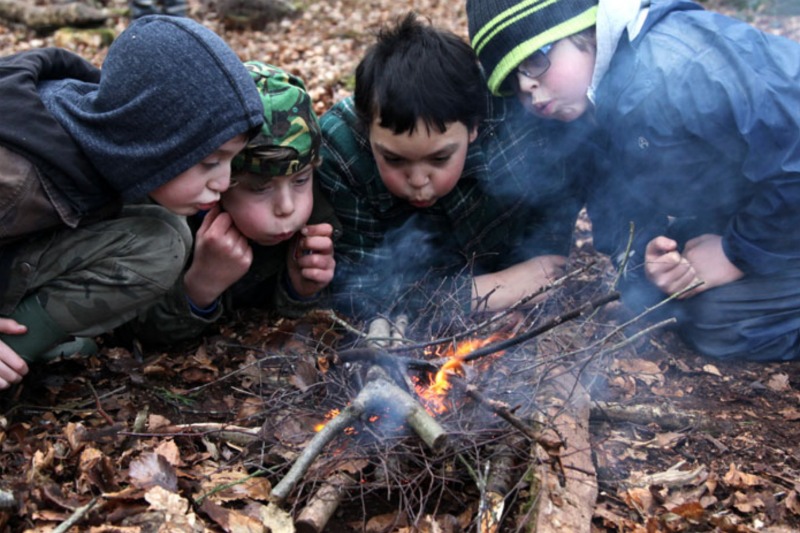
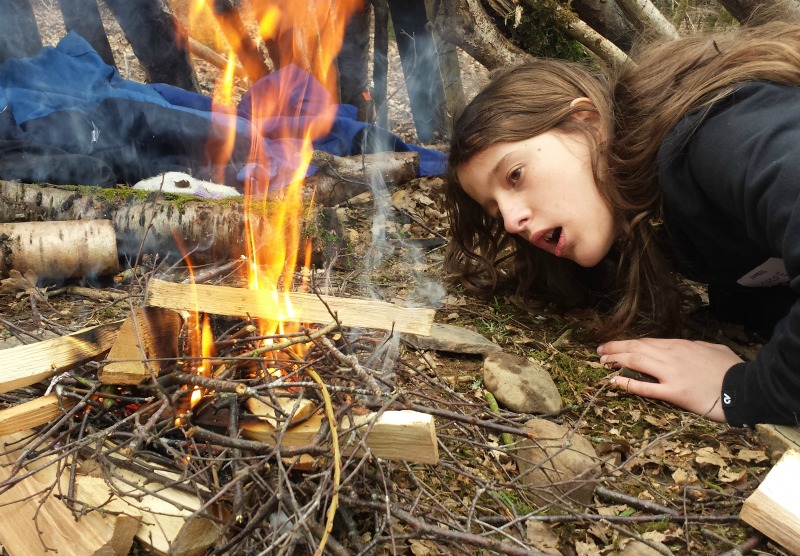
Here’s the thing, children LOVE playing with fire – so we might as well teach them how to play with it safely and how to be responsible when lighting their own fires out in the woods. We’ve never had a burn injury at our Forest School sessions. We have established boundaries for the main campfire and clear rules on what kids can and cannot do with their own fires.
In this episode of our vlog Rewild My Child you can see our regular Young Rangers lighting their own fires and passing on some of what they’ve learned.
YOU CAN WATCH THIS EPISODE OF OUR VLOG RIGHT HERE…
I find it so encouraging to see how far these children have come with their firelighting skills and knowledge of camp craft. It’s very satisfying (as a teacher) to see them gathering enough kindling to start their fire, picking out dry sticks rather than wet, soggy ones and to see how they can rekindle a struggling fire using the right techniques. These children love lighting fires and are happy simply to let them blaze away – I’ve never seen a child trying to burn the woods down. They might make smoke signals, make charcoals for drawing or simply poke away at the embers with burning sticks. The fire acts as a warming and comforting focal point for the group to be together, enjoying nature. This has been the role of campfires for generations and long may it continue.
If you liked this and want to see more – check out our YouTube Channel, where we have a whole host of videos from How To Make Wild Teas to How To Use An Axe With Kids.
We use cookies on our website to give you the most relevant experience by remembering your preferences and repeat visits. By clicking “Accept All”, you consent to the use of ALL the cookies. However, you may visit "Cookie Settings" to provide a controlled consent.
This website uses cookies to improve your experience while you navigate through the website. Out of these, the cookies that are categorized as necessary are stored on your browser as they are essential for the working of basic functionalities of the website. We also use third-party cookies that help us analyze and understand how you use this website. These cookies will be stored in your browser only with your consent. You also have the option to opt-out of these cookies. But opting out of some of these cookies may affect your browsing experience.
Necessary cookies are absolutely essential for the website to function properly. These cookies ensure basic functionalities and security features of the website, anonymously.
Cookie
Duration
Description
cookielawinfo-checkbox-analytics
11 months
This cookie is set by GDPR Cookie Consent plugin. The cookie is used to store the user consent for the cookies in the category "Analytics".
cookielawinfo-checkbox-functional
11 months
The cookie is set by GDPR cookie consent to record the user consent for the cookies in the category "Functional".
cookielawinfo-checkbox-necessary
11 months
This cookie is set by GDPR Cookie Consent plugin. The cookies is used to store the user consent for the cookies in the category "Necessary".
cookielawinfo-checkbox-others
11 months
This cookie is set by GDPR Cookie Consent plugin. The cookie is used to store the user consent for the cookies in the category "Other.
cookielawinfo-checkbox-performance
11 months
This cookie is set by GDPR Cookie Consent plugin. The cookie is used to store the user consent for the cookies in the category "Performance".
viewed_cookie_policy
11 months
The cookie is set by the GDPR Cookie Consent plugin and is used to store whether or not user has consented to the use of cookies. It does not store any personal data.
Functional cookies help to perform certain functionalities like sharing the content of the website on social media platforms, collect feedbacks, and other third-party features.
Performance cookies are used to understand and analyze the key performance indexes of the website which helps in delivering a better user experience for the visitors.
Analytical cookies are used to understand how visitors interact with the website. These cookies help provide information on metrics the number of visitors, bounce rate, traffic source, etc.
Advertisement cookies are used to provide visitors with relevant ads and marketing campaigns. These cookies track visitors across websites and collect information to provide customized ads.