Call us on: 07876 794098

trees

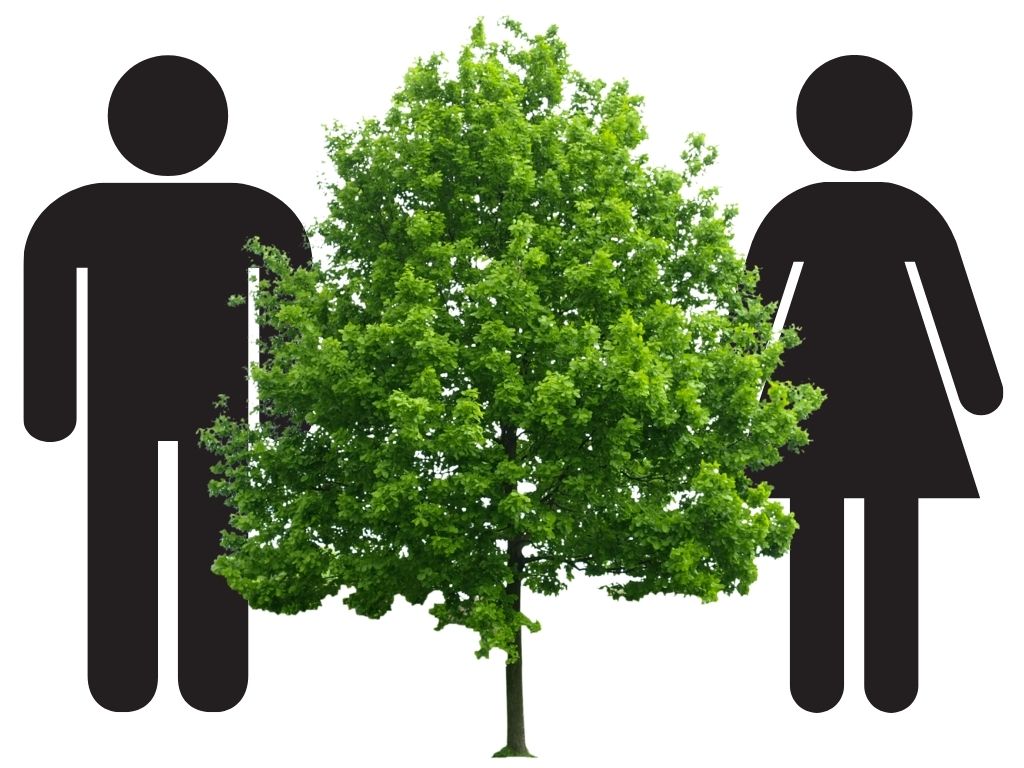
are trees male and female?

Are Trees Male & Female?

We all know how it works with animals, but can trees be either male or female? Or do they have their male and female reproductive parts on the same tree? In this article I’ll break down for you the answer to the question whether trees can be male or female and also give you some common examples you can see for yourself, out in the countryside.

The short answer to the question is… sometimes.

It’s a question I had to ask myself when doing research for creating my FREE Tree Identification Online Course. Having scoured the books and spent extensive time in the field looking at the evidence, I’ve discovered that here in the UK we have a number of native species which have separate male and female trees, although they are in the minority.


WORD OF THE DAY: DIOECIOUS

Trees which do have separate male and female individuals are referred to as being dioecious (pronounced dye-e-schuss), which is defined in the dictionary as “having the male and female reproductive organs, especially flowers, on different individuals.”

On the flip side, trees and plants that include the organs or flowers or both sexes on the same individual are called monoecious. The majority of native trees fall into this category, including trees like oak, birch, beech and hazel.

birch and hazel male and female flowers

Left: Birch with both male & female parts on the same branch. Right: Hazel with female flowers above and male catkins below.

In the image above you can see that the birch (Betula spp.) has female flowers (small, green and upright catkins) as well as male flowers (long pendulous and speckled catkins) on the same branch. Meanwhile hazel (Corylus avellana) has very different female and male parts on the same tree.

An easy way to remember which parts you’d expect to see on a dioecious tree is that with male trees they produce the seed (in this case pollen) which then fertilises the female trees which then grow the fruit, seed, nut or berry – sound familiar?


LOOKING AT EXAMPLES

So, where might you have seen a dioecious tree whilst out on your Sunday walk? Let’s talk about some examples.

Have you ever wondered why you don’t always see red berries on a holly (Ilex aquifolium) in winter? This is because only the female trees bear the fruit. It’s worth noting that there are other factors at play as well, such as whether a holly tree is getting too much shade (making it sterile) or it has no male nearby to pollinate it, so not every holly you see without berries will be a male, but EVERY holly you see with berries is a female.

holly with female berries and male flowers

Holly (Ilex aquifolium) with the familiar female berries on the left and on the right a separate tree with male flowers.

Both male and female holly trees have flowers, appearing in May, but there are subtle differences for which you might need a hand lens, so the easiest way to tell is in berry season.


WILLOWS & POPLARS

Once the early spring comes around there’s another two families of native trees which announce their gender, loud and proud, for all the world to see. These are the willows and the poplars. Both families of trees are closely related.

In late February and through March the willows explode with fluffy, dangling catkins. Think of the ‘pussy willow’ (Salix caprea) named after its young male catkins which look and feel like fluffy cats paws.

goat willow - male & female

Goat Willow (Salix caprea) also known as pussy willow. On the left we have the male catkins on one tree. One the right we see the female catkins on a separate tree.

Look at the yellow pollen, clearly visible on the male flowers on the left picture. Remember, this pollen is needed to fertilise the female flowers on another tree.

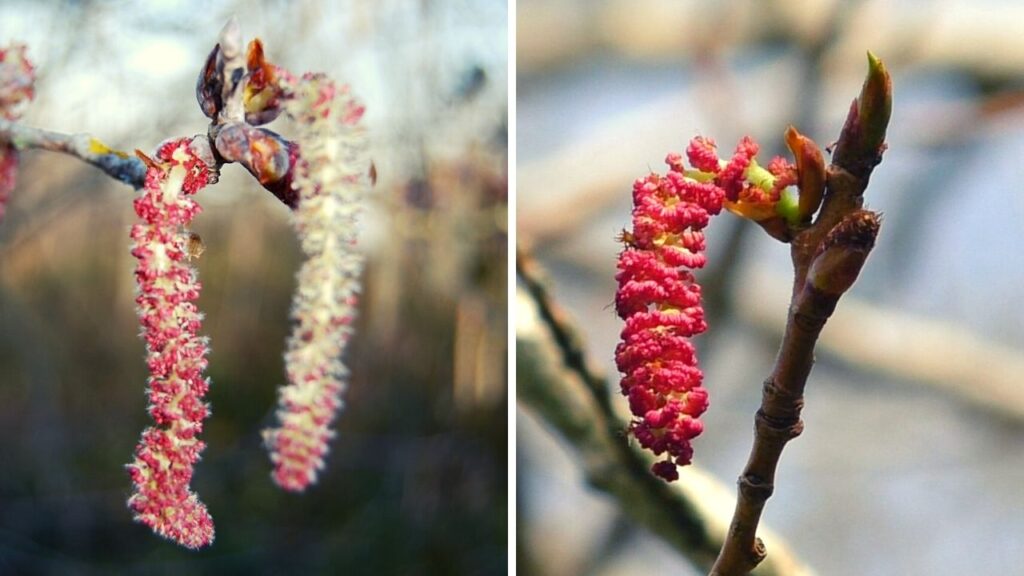
Meanwhile the poplars, follow suit with their own catkins. Like willows these catkins are easy to spot in early Spring as they are out before the trees come into leaf, so they really stand out. Look at the example in the picture below, we have both White Poplar (Populus alba) and Black Poplar (Populus nigra) with their striking crimson male flowers. In both cases the female flowers (also catkins) are green rather than red, so easy to tell apart once you know this.
white & black poplar - male flowers

White Poplar (Populus alba) on the left, Black Poplar (Populus nigra) on the right. Showing off in spring with their male flowers.


A TREE THAT BREAKS THE RULE

The ash (Fraxinus excelsior) is our third most common tree and it’s the rebel of the pack. Bending the rules – there’s always one. Look closer and in spring you could see both male and female flowers on the same tree (though on different branches) but you can also find ash trees which are exclusively male or female.

In winter, once the leaves have fallen you can often spot an ash a mile off, distinctive by its seeds, called “keys” hanging in dense bunches all in the crown. They really stand out in the overall silhouette of the tree, so look out for it. You’ll have to wait until spring though to answer the question of whether it’s male or female… or both! If you want to see pictures of both the male and female flowers of the ash, you can find these in the photo galleries of my Tree ID Course, it’s free to sign up.

So, if you’re planning some tree planting yourself and you want to include any of the species mentioned here you do need both a male and a female in order to let nature work its magic. However, if you are planting trees simply for ornament and you don’t want to encourage a young forest sprouting up around you (although personally that sounds quite nice to me) then it doesn’t matter, the tree will be perfectly healthy on it’s own.


BOYS & GIRLS – THE DEFINITIVE LIST

Here’s a complete list of all the native tree species which are dioecious (male or female)

Ash (sometimes), Aspen, Black Poplar, Buckthorn, Grey Poplar, Holly, Juniper, Sea Buckthorn, White Poplar, Willows and Yew

If you found this interesting and want to know more about the trees around you, then you can start building your tree ID skills right now by signing up to my FREE introductory online course Kickstart Your Tree ID Skills.

REGISTER FOR THE FREE COURSE HERE

kickstart your tree id skills, free online course

When you sign up to this free mini-course you’ll be identifying common trees with video tutorials and photo galleries at your fingertips. Start your journey to becoming a fully fledged Tree Expert today. The course includes Tree ID Cheat Sheets which you can download and take outdoors with you.

“I’ve been frustrated for so long trying to learn my trees myself and haven’t gotten far. This course answered everything and has seriously upped my game.” Dr. Patrick Alexander


Happy tree hunting folks.

James

top 3 easy ways to identify trees

3 TOP TRICKS TO IDENTIFY ANY TREE

Ever get frustrated that you don’t know what tree it is you’re looking at? Don’t sweat it, I’m going to share with you my top 3 techniques for identifying any tree out in the countryside.

I call these techniques, my 3 Key Principles of Tree Identification. Have a look at the video below and I’ll explain what they are and how you can use them yourself.


When practising tree identification (and this goes for wildflowers too) I like to play a game of elimination, whittling down what the tree isn’t to help me work out what it is. Using these techniques helps me do that. So, let’s elaborate some more on these 3 Key Principles…


TECHNIQUE 1:   TUNE IN

Think about your surroundings. Ask yourself, “where am I?” Are you in farmland, a town park, an old country estate or a retail centre car park?

This is important because the setting of where you’re looking at a tree can tell you a lot about which species you might expect or not expect to see.

For instance, if we’re out in farmland or a natural woodland then it’s most likely we shall see a range of our common native tree species; oak, hawthorn, ash, willow and so on. The trees that make up the majority of our countryside.

countryside

However, if we’re somewhere like a National Trust property, an old country estate, the likelihood of exotic tree species having been planted here becomes much greater. You could be seeing rhododendron, eucalyptus or even giant sequoia.

The same goes for looking at trees in somebody’s garden – they could have planted anything! There are hundreds of Acers (from the maple family) and a whole host of ornamental birches for a start, many of which are common place in gardens up and down the country.

This principle also applies to the wider environment. For instance you’re going to see a different variety of species down in Devon than you will up in the Highlands of Scotland. Certain tree species prefer certain soil types, or micro-climates, and some species will tolerate more extreme conditions, such as a mountain-side, more than others will.

So, a good habit to get into when you start practising tree identification, is when you arrive at a location to start tree hunting, take a moment to stop and ask yourself:

“Where am I?”

“What is the history of this environment?”

“Which species do I expect to see here?”

The more you practise tree identification, the more experience you will build up and the better you’ll be able to predict the range of species you could see when visiting a new place.


TECHNIQUE 2:  BEGIN WITH THE BRANCH

Study a young, healthy branch first.

With most tree species, you can find everything you need to know to identify it in any season simply by looking at a healthy, young branch from the tree.

Depending on the season, a young healthy twig is going to include one or more of the following distinctive features:

Buds, leaves, flowers, fruit, nuts and of course the young bark itself.

Think of a young healthy branch as the tree in microcosm. Often, everything you need to know is right here.

tree identification in winter

Everything you need to know to identify the tree can usually be found at the tip of a branch.

One word of warning, make sure that the branch you’re looking at is actually attached to the trunk of the tree you’re investigating. When you’re in a woodland or looking at a hedgerow branches tend to cross over from other trees in their race to reach sunlight and it can be easy to grab hold of a branch from the neighbouring tree.

This may sound obvious but I’ve seen it plenty of times on courses and even done it myself and it can cause a lot of confusion.

So, once you’ve selected your branch to study. Just take a moment to follow it back with your eye and check it’s attached to the right tree.


TECHNIQUE 3: IS IT ALTERNATE OR OPPOSITE?

Study the bud or leaf arrangement.

Depending on the time of year, the twig is either going to include buds or leaves. These features are going to be laid out in one of two forms:

1.   Alternately along the branch.

2.   Growing in opposite pairs.

This is absolutely key to nailing the species of tree as once you’ve answered that question it allows you to eliminate a whole bunch of species from your enquiry.

So I like to ask the tree this question when I first approach it. “Are your buds arranged alternately or in opposite pairs?”

The majority of native tree species in Britain have their buds or leaves arranged alternately along the branch.

One last thing to remember; it’s important to select a young healthy twig to answer this question because as a branch matures it will often self-select the healthiest of the twigs to grow on and will drop it’s near partner. So, you can be looking at an older branch and thinking that they definitely don’t grow in opposite pairs, but then on closer inspection you might well notice the old scar left over from where it’s opposite equivalent was self-selected to be dropped by the tree in favour of it’s partner.

When you become practised at this you will begin to start noticing the bud arrangement from a distance, as you look at the form of tree. This is when tree identification can become very satisfying and you can really start showing off.


IN CONCLUSION

In conclusion, keep these three principles in mind when you’re out and about looking at trees. They will give you a solid grounding from which to build your skills up from.

If you found this interesting and want to know more, you can start building your tree ID skills right now by signing up to my FREE introductory course Kickstart Your Tree ID Skills.

REGISTER FOR THE FREE COURSE HERE

Happy tree hunting folks.

James
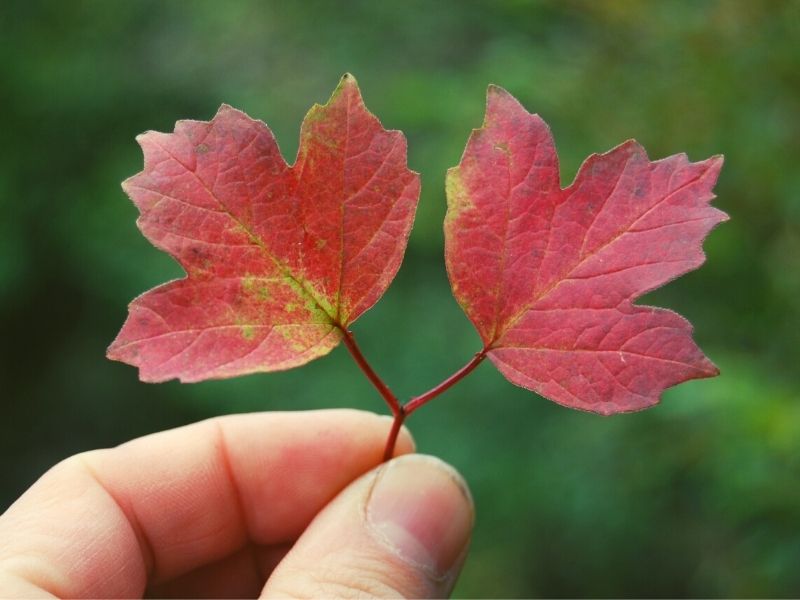
how to identify trees in autumn

Identify Autumn Trees Like a Pro

Autumn is a beautiful time to be out in the woods, with all the fantastic colours our trees give us. But many people struggle to really know what they’re looking at. Can you tell your beech from your birch, or your alder from your elder? I’ve been on a mission over the past few years to build my tree ID skills and I’ve brought all that experience together in an online training course, which will take you from clueless to confident in your own tree knowledge. In this blog I want to share with you some of my top tips for really getting to know your trees in autumn.

Autumn is a season where many of the leaves we could be familiar with are changing, so we need to look closely at what’s going on and also start relying on some other features to make a positive ID.

I’ve made a video showing you how to recognise our native field maple (Acer campestre) in the season of autumn. Its a tree that many folks get confused with sycamore or the many other non-native maples which can be found across the UK.

If you liked this video and would like more good stuff then you can sign up to my new online training programme, The Complete Tree ID Course. It’s totally FREE to enroll on the introductory course Kickstart Your Tree ID Skills

ENROLL ON THE COURSE NOW

When you join the free course you will also get tree ID videos for ash and hazel in autumn.

tree id cheat sheets: ash in autumn

Join the online course and get seasonal Tree ID Cheat Sheets for many British tree species. Download them to your mobile device or print them off.

So, let’s talk about a few things to look out for at this time of year with my top tips for identifying trees in autumn…


Look for consistent colour when the leaves change.

Although many trees show a range of golds, yellows and reds at this time of year, some tree species give an even display of a dominant colour in autumn. Once you’re familiar with that, it can be recognised from a distance before you even get anywhere near the tree. In the video on field maple here you will have seen how that tree produces an even display of bright yellow across all the leaves. This is in contrast to sycamore which typically doesn’t give a show like this.

hornbeam in autumn

Let’s play ‘Spot the Hornbeam.’ The tree gives a reliably even display of yellow at this time of year.

Hornbeam (Carpinus betulus) is another native tree which gives an even display of yellow across the whole tree. This can be really useful when differentiating it from beech (Fagus sylvatica), which is a tree is shares a lot of similarities with. Lucky for us, beech leaves don’t turn a bright yellow anywhere as evenly. Look out for consistently yellow leaves on Birch trees also.

Red is a colour associated with leaves in autumn but in reality there are very few native tree species out in our countryside that give us a good show of red. So if you’re seeing this colour strongly across a tree or shrub it can only be one of a few species; Guelder-rose (Viburnum opulus), Dogwood (Cornus sanguinea) and Spindle (Euonymus europaeus).

guelder rose in autumn

There are few native trees in the UK which give a show of red, Guelder-rose is one of them.

Look at WHEN Leaves Fall

Certain tree species drop their leaves much earlier than others. Ash (Fraxinus excelsior) is a great example of this. Strangely, it’s also one of the last trees to come into leaf in late Spring, so they don’t hang about long. Once you look, you might notice ash looking pretty bare as early as late September. So, if we take that feature and use it when we’re looking at a bunch of trees from a distance in autumn, if you’re seeing a tree with bare branches when others around it are still well leaved then you could well be looking at an ash.

ash tree in autumn

The ash tree here clearly stands out from the crowd as most of its leaves have already fallen.

Also, it’s worth knowing that young beech and oak (Quercus spp.) trees often hold onto their brown leaves right through winter. So at the back end of autumn, if a broadleaf tree still has its leaves, it’s probably one of those two.


Know Your Fruits, Nuts , Seeds & Berries

Autumn is, of course, the time for an abundance of fruit and nuts in our hedgerows. For many of our natives this can be the season where they really shine and become visible to us, standing out from the crowd. A great show of berries or fruit can take centre stage, such as with the crab apple (Malus sylvestris) with it’s branches heavy with small, green/yellow apples.

When it comes to the hazel (Corylus avellana) you might think that the familiar hazelnut would be the thing to look out for in autumn, however these nuts can be pretty unreliable and by mid-autumn they’ve usually already all been snaffled by the squirrels, birds and mice. The good news is that there is another key feature you can look for on the hazel at this time of year which is much more reliable. But rather than tell you here, I’ll show you….

I’ve made a video all about Identifying Hazel in Autumn as part of the free course Kickstart Your Tree ID Skills, so if you want to check that out just follow the links in this blog. You’ll also see my top hazelnut foraging tips in that video too.

If you found this interesting and want to know more, you can learn my 3 Key Principles of Tree ID which you can apply to any tree, and lots more top tips and techniques by signing up to my FREE introductory course Kickstart Your Tree ID Skills.

REGISTER FOR THE FREE COURSE HERE

Happy tree hunting folks.


The Complete Tree ID Course

  • 1
  • 2
Social Share Buttons and Icons powered by Ultimatelysocial