
Call us on: 07876 794098

activities

Felin Puleston Outdoor Centre

Make Your Own Seed Bomb!

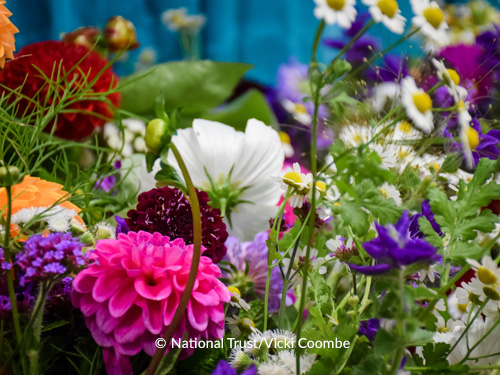
The bees need our help. The UK has lost 98% of its wildflower meadows in the last 70 years. March to May is a good time to plant wildflower seeds, and for kids, making seed bombs is a great way to get them excited about native flowers and so get them noticing the plight of our pollinators. You can plant these out in your garden or do some guerilla gardening by scattering them along the route to school or on a roadside verge.

seed bombs

What You Need: Clay (or heavy mud), compost, sand, wildflower seed mix, and an egg box to store them in.

1. Make a ball of clay by rolling it in your hands, just smaller than a golf ball. Flatten it out and mix in some compost and sand, then roll it back into a ball.

2. You want enough compost and sand to give the seeds something to grow in but enough clay to make sure the bomb holds together. Just play about with it until it looks right – the messier your hands are, the better.

3. Push your thumb into the middle to make a bowl shape and sprinkle a few pinches of seeds into the bowl. Fold up the bowl so the seeds are captured inside and roll back into a ball.

4. You can store the seed bombs in an egg box until you’re ready to plant out.

5. The best place to scatter the bombs is in a patch of bare soil. Wildflowers prefer poorer soil and don’t want to compete with grass.

6. Crumble up the bombs and scatter over the bare soil. Then either tread or rake them in.

7. They’re best planted before rain, but if the weather is dry – just add water.

Our first Little Rangers!

Well yesterday was the first of our Little Rangers sessions.

The sun was shining, the air was warm and spirits were high. Fourteen adults and about fifteen children had a lovely afternoon relaxing and exploring in the wooded area at Denmark Farm in Lampeter.

There were a few items to play with, washing bowls of water with cups, baskets with stones in, a net hanging in the trees, some tubs of rice and pasta and a few musical percussion instruments. There was also a blanket with nature themed books available and some planted herbs to ignite the senses.

The children enjoyed a very relaxed learning environment that evolved round child-led play. It was also a wonderful opportunity for parents to get together and connect in a beautiful setting.

I was particularly struck with how peaceful it felt and I was reassured that there really was no need to provide a structured set of activities for the children to engage in. The natural environment was stimulus enough.

I am looking forward to our second group next week. I hope the weather will be as nice as it was yesterday and thank you to all who came and made it a special day.

Lea. x

Is competition healthy?

People have different views on competitive sports/games with children. I personally shy away from them all together.

When I run activities I will always adapt the game to make sure no child is ‘out’. I have lots of memories at school about sports or games where if you weren’t incredibly sporty or competitive then you would be ‘out’ of the game, what I remember most vividly is the feelings that went with it and they weren’t nice feelings, but does that mean I should exclude all competition in my activities?

There is one game I play with the Parachute and it’s called mushroom, basically if the parachute lands on you then you sit down. I feel ok with this because no-one is ‘out’ they still remain in the circle and it’s actually quite fun to have the parachute land on you.

Being ‘out’ always happened because you either weren’t fast enough, aggressive enough, agile or clever enough and I remember children purposely not trying and getting ‘out’ straight away and saying they couldn’t be bothered, but this was just a way of saving face and it became more a choice than lack of ability. Everyone knew though that it was a fear of ridicule and the feelings that went with loosing that influenced this self-sabatage.

So I prefer to play games where kids don’t loose. There is an exemption to this and that is when a child is part of a team and the experience is shared and even then I will encourage the ‘loosing’ team to reflect and come up with strategies to help them next time.

All in all I always try and loose the idea of loosing and failure, after all, failure is just a step toward success, right? It is nice to reward a child when they win at something but that implies that it is not good if they don’t win, for then they fail, and failing has negative connotations attached to it. So at Young Rangers I am trying to get into the habit of rewarding effort and giving praise when a child is trying at something. In terms of emotional intelligence it is the success formula, there is no right or wrong, fail or succeed, there is only effort and trying and that is all we can ask of our little people to help them feel good about themselves and strive for happiness.

Lea. x

Aboriginal Art – Be a Tracker.

symbol collageWe’ve been tapping into the theme of ancient knowledge from native peoples around the world, so here’s something that children can try when making dens and secret paths for themselves. The Aborigines of Australia used these symbols to tell stories, but they can also be used to share observations and camp secrets for other travellers, but only if you know how to read the symbols.

Can you make up your own symbols and meanings to add to these?

Make a Birdfeeder on a Budget

With the winter still upon us, February is a lean time of the year for our feathered friends, so why not give them a helping hand, whilst also recycling something we all have hanging around the house – loo rolls. Why pay out for a plastic feeder when this simple solution will do the trick.

Birdfeeder CollageWhat You’ll Need:
Loo roll or kitchen roll tube • Lard • Mixed birdseed • Some string and a stick

Method

1. Tie a length of string around the middle point of your stick, securing it and making a loop in the loose end, leaving it long enough to hang outside your tube.

2. Melt some lard in a pan and then pour it onto an old baking tray. Allow it to cool and almost solidify, then roll the tube in the fat a few times to build up the layers.

3. Either roll the sticky tube in a tray of birdseed or sprinkle the seed onto the tube to get good coverage.

4. Carefully thread the string through the tube, so that the stick acts as a perch at the base.

5. You’re now ready to hang it in the garden, watch and wait for the birds to tuck in.

6. Any leftover lard and birdseed can be rolled up into a fat ball for the birds to enjoy.

Bush Tucker: Damper Bread on a Stick

We’ve had a lot of fun making damper bread over the campfire, as it’s quick, simple and kids love it. You can try it at home over a log fire. For an added festive twist, once cooked, why not give each piece a sprinkling of sugar and cinnamon.

damper breadIngredients (enough for 10 dampers)
• 4 cups self raising flour
• 1½ cups milk (or water)
• ½ teaspoon of salt
• Green sticks (fresh hardwood) will need to be about as long as your arm and as thick as your thumb.

Method

  1. Mix the ingredients into a soft, light dough by adding the liquid to the flour slowly, constantly mixing with a knife, then knead for 5 minutes.
  2. Divide the dough into balls slightly larger than a golf ball.
  3. Strip the sticks of their bark with a knife to ensure they’re clean.
  4. Work each portion of the dough onto the end of a stick in the shape of a sausage, making sure to cover the end of the stick.
  5. Cook each damper over the embers, turning constantly so as not to burn. After about 15-20 minutes, the damper should be golden on the outside and have doubled in size.
  6. Remove the damper from the stick, break it open and add your own topping; jam, butter or anything you like. Enjoy!
Social Share Buttons and Icons powered by Ultimatelysocial